How a 12-Clinician Psychiatry Practice Cut No-Shows by 42% and Grew Session Capacity 18%
Service
Virtual Medical AssistanceIndustry
General PsychiatryProviders
10 therapists / 2 prescribersTimeline
3–6 monthsRegion
Upper MidwestAbout This Project
A psychiatry and mental health practice in the Upper Midwest, staffed by 10 therapists and 2 prescribers, came to CureMed with a problem most behavioral health administrators will recognize immediately. The schedule looked full on paper, yet clinicians kept ending their days with empty hours. No-shows were draining session capacity, cancelled slots went unfilled, and the front desk was improvising intake and scheduling decisions without a consistent process behind any of them.
CureMed was engaged to provide integrated practice management support alongside its psychiatry billing services. The engagement covered four connected workstreams: a structured appointment reminder cadence, a waitlist backfill process for cancelled and missed slots, intake and eligibility checks completed before every first appointment, and schedule utilization reporting that gave leadership a weekly view of where clinical hours were actually going.
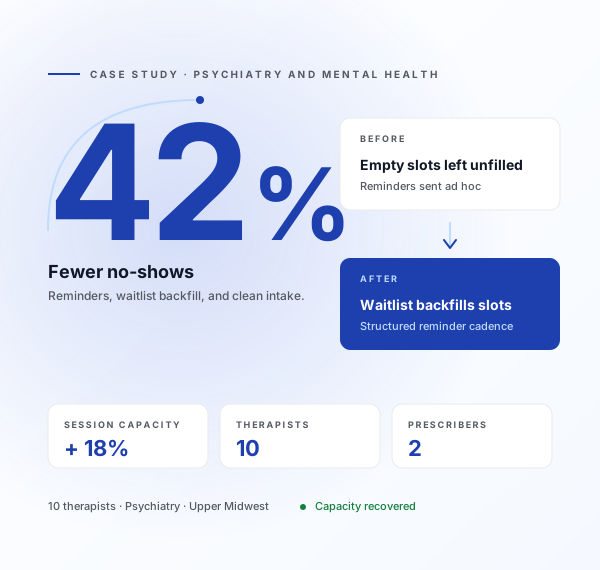
The outcome, measured after the new workflows had stabilized, was a no-show rate cut by 42% and session capacity increased 18%. The practice achieved both with the same clinicians, the same office space, and no additional front desk hires. This case study walks through what was broken, what CureMed changed, and why the combination worked where isolated fixes had failed before.
Where the Session Capacity Was Going
Mental health scheduling is unforgiving in a way most medical scheduling is not. Sessions are timed to the minute, booked back to back, and delivered in mixed lengths: shorter medication management visits for the prescribers, standard therapy sessions, and longer initial evaluations. When a patient does not arrive, there is no procedure room to turn over and no walk-in traffic to absorb the gap. The hour is simply gone, and so is the revenue attached to it.
A no-show problem the practice could see but not fix
The practice knew it had a no-show problem. What it lacked was any system for doing something about it. Reminder calls happened when the front desk had spare time, which in practice meant they happened inconsistently and often not at all on the busiest days. Patients who missed a session received no structured follow-up, so a single missed appointment frequently drifted into a lapse in care. And because nobody was tracking which appointment types, times of day, or patient situations produced the most misses, the practice had no way to aim its limited administrative energy where it would matter most.
This pattern is common across behavioral health, and it is worth naming why. For many psychiatric patients, the barriers to attendance are entangled with the conditions being treated. Depression, anxiety, and trauma-related presentations can make keeping appointments genuinely difficult rather than merely inconvenient. Any serious effort to reduce patient no-shows in a mental health setting has to account for that clinical reality. Reminder scripts borrowed from a dental office will not work; outreach has to be persistent, low pressure, and clinically aware.
First appointments booked on hope
New patient intake was a second leak. Intake calls were squeezed between other front desk tasks, first appointments were often booked weeks out, and insurance details were collected but rarely verified before the visit. The results were predictable on both ends. Some new patients lost momentum during the long wait and never arrived. Others showed up, received a full session, and only afterward did the practice discover that coverage details were wrong, that the rendering clinician was out of network for the plan, or that behavioral health benefits ran through a carve-out the front desk had never identified. The practice was delivering sessions that were never going to be paid cleanly, and finding out weeks later through denials.
A schedule nobody could read
The third problem was visibility. Each clinician's template had accumulated informal preferences and one-off accommodations over years of growth, and none of it was documented anywhere except in the memory of the front desk staff. Cancellations were noted in the system but never analyzed. Leadership could feel that capacity was leaking, but could not say how much, where, or whether any given change was helping. Behavioral health practice operations run on tight margins of clinician time, and without measurement, the practice was managing its most valuable resource blind.
The CureMed Approach: Four Connected Workstreams
CureMed's assessment concluded that these problems reinforced one another. Unfilled cancellations magnified the cost of every no-show. Unverified intakes fed the no-show pattern among new patients. Missing utilization data hid all of it from leadership. So the fixes were designed as one system rather than a list of tips, rolled out in a deliberate sequence.
A structured reminder cadence
CureMed replaced ad hoc reminder calls with a defined multi-touch cadence applied to every scheduled appointment: an automated confirmation at booking, a reminder several days ahead, a personal confirmation call two days before the visit, and a brief text on the morning of the appointment. Patients flagged as higher risk, including new patients and anyone who had recently missed a session, received an additional personal touchpoint from a staff member rather than another automated message.
The outbound calls were handled by CureMed's virtual medical assistance team, working as an extension of the practice's front desk under the practice's name. Scripts were developed with the clinical director so the tone fit a mental health context: warm, brief, and free of pressure or guilt. Just as important, every contact attempt was logged. A missed reminder became a visible gap in a tracked checklist instead of an invisible omission nobody would ever discover.
Missed appointments triggered their own protocol. Every no-show was followed by a personal outreach contact within a day, acknowledging the missed session and offering to reschedule. That single step converted a large share of missed appointments into rebooked ones and kept treatment relationships intact through disruptions that previously turned into quiet dropouts.
Waitlist backfill for cancelled and missed slots
The second workstream turned cancellations from dead time into opportunity. CureMed built and maintained a live waitlist of patients who wanted earlier appointments, organized by clinician, session type, and ability to come in on short notice. When a cancellation arrived, or a no-show was confirmed shortly after the appointment start time, staff immediately worked the list by text and phone until the slot was filled or the window closed.
Backfill mattered clinically as well as financially. Some of the patients reached through same-day outreach were struggling at the moment of the call, and an earlier session was genuinely valuable to them rather than merely convenient. Over the course of the engagement, clinicians came to view the waitlist as part of access to care, not just schedule hygiene, which made them active contributors: therapists began flagging patients who would benefit from earlier availability so the list stayed current.
Intake and eligibility checks before the first appointment
CureMed restructured new patient intake so that no first appointment was confirmed until two things had happened: the intake packet was complete, and coverage had been verified. CureMed's patient eligibility verification team confirmed active coverage, behavioral health benefits, carve-out arrangements, copay and deductible status, and network participation for the assigned clinician, all before the patient ever sat down.
That one change removed two failure modes at once. Patients arrived at first appointments with accurate expectations about cost, which cut down on day-of surprises and last-minute cancellations. And the practice stopped delivering first sessions that were unbillable from the start, closing a revenue leak that had previously surfaced only as a slow drip of denials weeks after the fact.
Schedule utilization reporting
The fourth workstream supplied the measurement layer that had been missing. CureMed produced a weekly utilization report for each clinician and for the practice as a whole: hours available, hours booked, sessions delivered, cancellations, no-shows, and backfill recoveries. The report also flagged structural waste, such as template configurations that routinely stranded unusable half hours between sessions of different lengths.
Those reports fed a short weekly scheduling huddle with the practice administrator. Instead of discovering at the end of the month that capacity had leaked away, the team reviewed the coming two weeks, identified at-risk slots, and made proactive decisions about waitlist assignments and template adjustments while there was still time to act.
Rolling It Out Without Disrupting Care
Process change in a clinical setting fails when it is imposed on clinicians rather than built with them, and a psychiatric practice is an especially sensitive environment for new patient-facing workflows. CureMed staged the rollout accordingly.
The reminder cadence and backfill protocol launched first with a subset of clinician schedules, which allowed scripts and timing to be refined based on real patient responses before the practice-wide launch. Scheduling templates were rebuilt one clinician at a time, in short working sessions where each therapist's actual preferences and constraints were documented and then locked into the system, replacing the informal arrangements the front desk had been holding in memory.
Throughout the engagement, the practice's own front desk kept ownership of the in-office patient experience: greeting patients, handling in-person questions, and managing day-of logistics. CureMed's team took on the outbound and back-office volume, the reminder calls, waitlist outreach, verification work, and reporting, that the front desk had never had the hours to do consistently. Within the first quarter, the new workflows were simply how the practice operated, and the weekly huddle had become the operational heartbeat of the group.
The Results
The headline outcomes were exactly what the engagement set out to achieve: a no-show rate cut by 42% from its baseline, and session capacity increased 18% across the practice's 10 therapists and 2 prescribers.
The capacity gain came from three reinforcing sources. Fewer scheduled sessions were lost to no-shows in the first place. A meaningful share of the cancellations that still occurred were backfilled from the waitlist instead of sitting empty. And the template cleanup recovered clinical hours that had been stranded between mismatched session lengths, hours that had never been visible as a problem until the utilization reports made them impossible to ignore.
| Metric | Result | What changed |
|---|---|---|
| No-show rate | Cut by 42% | Multi-touch reminder cadence, personal outreach to higher-risk patients, and follow-up after every missed session |
| Session capacity | Increased 18% | Waitlist backfill of cancelled and missed slots plus template cleanup that recovered stranded clinical hours |
| First-appointment readiness | Every new patient verified before the visit | Intake completion and eligibility checks moved ahead of appointment confirmation |
| Schedule visibility | Weekly utilization reporting per clinician | Leadership decisions now made from data in a standing huddle instead of end-of-month impressions |
The downstream effects were just as important, even where they resist a single number. New patients moved from intake call to first appointment with fewer dropouts along the way. Clinician days became steadier and more predictable, which the therapists felt directly in their own energy and caseload continuity. And because first visits were verified before they happened, a substantial share of the denials that had been flowing from unverified coverage disappeared at the source, which cleaned up the practice's medical billing pipeline without any change to how claims themselves were worked.
What Other Behavioral Health Practices Can Take From This
The practice in this case study was not mismanaged. It was a growing group whose administrative systems had quietly fallen behind its clinical success, which describes a large share of mid-size mental health groups. A few signals suggest the same pattern may be present in your own operation:
- Clinicians regularly end days with unexplained empty hours even though the schedule was full a week earlier.
- Reminder outreach depends on whether the front desk has time, rather than on a tracked cadence.
- Missed appointments receive no consistent follow-up, and some of those patients never return.
- First appointments are booked before insurance is verified, and coverage problems surface as denials after care is delivered.
- Nobody can state the practice's utilization rate, by clinician or overall, without a manual audit.
None of these problems requires new clinicians or new software to fix. They require a consistent process, dedicated hours to run it, and reporting that shows whether it is working. The playbook also travels well beyond psychiatry: CureMed applied a closely related approach in primary care, documented in this case study on how a family practice cut no-shows with virtual assistant support.
Why It Worked
Each workstream in this engagement addressed a different point in the same loop. The reminder cadence kept scheduled sessions from becoming no-shows. The waitlist recovered value from the misses and cancellations that still happened. Pre-visit eligibility checks made sure the sessions that were delivered could actually be billed and paid. And utilization reporting closed the loop by showing leadership, every week, whether the whole system was holding.
That integration is the reason the numbers moved. A reminder system alone would have reduced misses but left cancellations unfilled. Backfill alone would have papered over a preventable no-show problem. Either one, without verification, would have filled the schedule with sessions that leaked revenue on the back end.
CureMed delivers this combination as integrated practice management support built for behavioral health: mental health billing services, eligibility verification, virtual front-office staffing, and operational reporting working as one accountable team. For psychiatric groups losing session capacity to no-shows and scheduling chaos, the fix is rarely one tool. It is a system, run with discipline, week after week.
Curious what your revenue cycle is actually leaving on the table?
Spend 30 minutes with our revenue cycle team and we'll walk through your current setup, surface where money is leaking from denials, slow payer follow up, undercoded encounters, and quantify what cleaning it up is worth in your first 90 days. No prep, no slide deck, just a working conversation with people who do this every day.