Reducing AR Days from 68 to 35 for a Behavioral Health Provider with Proactive Follow-Ups
Service
AR Recovery & DenialsIndustry
Behavioral HealthLocations
1 siteProviders
8 therapistsTimeline
3–6 monthsRegion
USAbout This Project
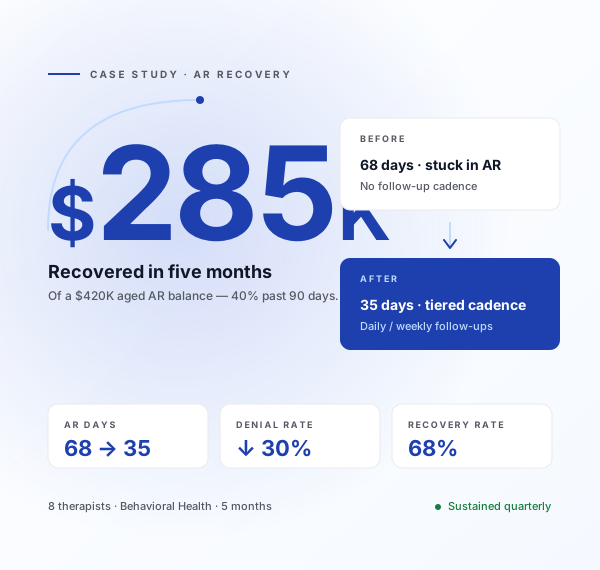
A behavioral health practice with 8 therapists providing psychiatric evaluations and medication management services came to CureMed with a problem that will sound familiar to many practice administrators: the clinical side of the business was thriving, but the billing side was quietly bleeding revenue. The practice's accounts receivable balance had grown past $420,000, and 40% of that AR had aged beyond 90 days. Average AR days sat at 68, nearly double what a well-run behavioral health practice should expect.
The root cause was not incompetence. It was capacity. A small administrative team was fully occupied with scheduling, intake, and day-to-day claim submission. Nobody had the bandwidth to work unpaid claims systematically, chase payers on the phone, or build appeals for denials that deserved a second look. Claims that were not paid on first submission simply sat in the aging report, losing value with every passing week.
This pattern is one of the most common reasons behavioral health practices seek outside billing help. Providers in this specialty carry heavy clinical loads and documentation burdens, and the margin for administrative slack is thin. Once a backlog forms, the same understaffing that created it makes it nearly impossible to dig out internally.
CureMed was retained with a two-part mandate: recover as much of the existing $420,000 in aged accounts receivable as possible, and build a durable system so the practice would never find itself in the same position again. Over five months, that engagement produced $285,000 in collections, cut average AR days from 68 to 35, and reduced the denial rate on new claims by 30%.
This case study walks through how the recovery was structured, why behavioral health AR presents unique obstacles, and what other mental health practices can learn from the approach.
Why AR Days Climb in Behavioral Health Practices
AR days in medical billing measure how long, on average, it takes a practice to convert a billed charge into cash. The metric matters because receivables are perishable. Industry experience is consistent on this point: the older a claim gets, the less likely it is to ever be paid. Claims that cross the 90-day mark often collide with payer timely filing limits, lost documentation, and staff turnover on both sides of the transaction. A claim ignored for four months is dramatically harder to collect than one worked in its first thirty days.
Behavioral health and mental health practices face several structural pressures that push AR days higher than in many other specialties:
- Time-dependent CPT codes. Behavioral health CPT codes are time-based, meaning the code billed must match the documented duration of the session. A 45-minute psychotherapy session and a 60-minute session carry different codes and different reimbursement. If the clinical note does not clearly support the time billed, payers deny or downcode the claim.
- Medical necessity scrutiny. Payers routinely question whether ongoing therapy or medication management is medically necessary, and they expect documentation that justifies continued treatment. Thin documentation is one of the most common denial triggers in mental health billing services.
- Inconsistent payer policies. Different insurers impose different rules on session length, session frequency, and prior authorization for continued therapy. What one payer approves without question, another denies without a pre-approved treatment plan on file.
- Small administrative teams. Most behavioral health groups run lean. When the same two or three people handle front desk, scheduling, and billing, follow-up on unpaid claims is the first task to be dropped.
Every one of these pressures was present in this engagement. The practice was submitting claims correctly most of the time, but "most of the time" is not enough when denied and pended claims receive no follow-up at all. In accounts receivable medical billing, the initial submission is only half the job; the other half is the persistent, deadline-aware follow-up that turns pended and denied claims back into revenue. When that second half is missing, even a practice with clean coding habits will watch its AR days drift upward month after month.
The Challenges CureMed Inherited
Before doing any collection work, CureMed's team audited the full aging report and the practice's billing workflow. Four distinct problems emerged.
Time-dependent coding and medical necessity denials
Because behavioral health CPT codes demand precise, time-stamped documentation, a meaningful share of the practice's denials cited insufficient medical necessity justification. Sessions were happening and care was appropriate, but the documentation trail did not always prove it to the payer's satisfaction. These denials were recoverable, but only with clinical detail attached to a properly constructed appeal.
Inconsistent payer rules on sessions and prior authorization
The practice billed multiple commercial and government payers, and each had different policies on the length and frequency of covered sessions, along with different prior authorization requirements for continued therapy. Without a reference system tracking which payer required what, authorization-related denials kept recurring. This is a common failure point that disciplined patient eligibility verification and authorization tracking at the front end can largely eliminate.
No prioritization of the receivables
The aging report treated every unpaid dollar the same. High-value, clearly collectible claims sat in the same queue as small-balance claims and accounts that were realistically never going to pay. When staff did find time for follow-up, effort was spread thin across the entire list instead of concentrated where it would return the most revenue.
40% of AR past 90 days with no follow-up procedure
The most damaging finding was structural: 40% of the receivables were already older than 90 days, and the practice had no defined follow-up procedure at all. No cadence, no ownership, no escalation path. Aged AR of this kind does not resolve on its own; it either gets worked aggressively or it gets written off.
The Solution: A Structured Accounts Receivable Recovery System
CureMed's response combined an intensive recovery project on the existing backlog with process changes designed to keep new receivables from aging. The work fell into four coordinated streams.
1. Priority tiering of every open claim
The first step was to stop treating the $420,000 as one undifferentiated pile. Every open claim was scored and tiered based on four factors:
- Age: how close the claim was to timely filing and appeal deadlines
- Monetary amount: the dollar value at stake
- Payer: each payer's historical responsiveness and appeal success rates
- Denial code: whether the denial reason was correctable, appealable, or terminal
High-priority, recoverable claims were elevated to immediate action. This mattered enormously in practice. A high-value claim nearing its appeal deadline with a correctable denial code was worked before a small-balance claim with a terminal denial, even if the smaller claim was older. Prioritization is the difference between an AR recovery project that produces cash quickly and one that produces activity reports.
2. A disciplined, escalating follow-up cadence
The team then imposed a systematic follow-up schedule tied to claim age, replacing the practice's previous approach of no follow-up at all:
- Claims aged 30 to 60 days: followed up once a week
- Claims aged over 60 days: followed up twice a week
- Claims exceeding 90 days with appeal opportunities: contacted daily
The escalating cadence reflects how claim value decays. A claim in the 30 to 60 day window usually needs a status check and perhaps a corrected resubmission. A claim past 90 days with a live appeal opportunity is in a race against deadlines, so it gets daily attention until it is resolved one way or the other. Every touch was logged, so no claim could silently fall out of the queue, and payer promises to reprocess a claim were calendared and verified rather than taken on faith.
3. Clinically supported appeals and a cleansed aging report
For denied claims with genuine merit, CureMed submitted appeals reinforced with clinical information: session documentation, treatment plans, and medical necessity narratives that addressed the specific denial reason. In behavioral health, an appeal that simply restates the original claim rarely succeeds; an appeal that demonstrates documented time, clinical rationale, and payer policy compliance frequently does.
Just as importantly, accounts that were truly uncollectible were identified and written off. This step is often skipped because write-offs feel like admitting defeat, but carrying dead balances distorts every AR metric and hides the real collectible number from practice leadership. Cleansing the aging report gave the practice an honest baseline and let the team focus effort exclusively on money that could actually be recovered. Effective denial management always includes knowing which battles not to fight.
4. Partnering with providers on documentation standards
Recovery alone would have treated the symptom and left the disease. The denials citing insufficient medical necessity traced back to documentation habits, so CureMed partnered directly with the practice's providers to enhance documentation standards. Therapists received specific, payer-informed guidance on documenting session time, clinical justification for continued treatment, and the elements each major payer expected to see. This is where specialized psychiatry billing knowledge earns its keep: generic coding advice does not cover the nuances of psychiatric evaluation codes, medication management visits, and psychotherapy add-on codes.
The result of this provider partnership showed up in the forward-looking numbers: the denial rate on new claims dropped by 30%, which meant less new AR forming behind the backlog being cleared.
Results: AR Days Cut From 68 to 35
Five months after the engagement began, the practice's receivables looked fundamentally different. The numbers below reflect the combined effect of the backlog recovery project and the process changes running in parallel: as the tiered follow-up work converted aged claims into payments, the documentation and authorization improvements kept the front of the pipeline from refilling the aging report.
| Metric | Result | What changed |
|---|---|---|
| Aged AR collected | $285,000 of $420,000 | Backlog worked by priority tier with escalating follow-up |
| Recovery rate on aged AR | 68% | Appeals with clinical support; uncollectible balances written off |
| Average AR days | 68 → 35 (49% reduction) | Systematic follow-up cadence replaced ad hoc effort |
| New-claim denial rate | Dropped 30% | Provider documentation standards raised; payer rules tracked |
| Recovery timeline | 5 months | Structured project with weekly, twice-weekly, and daily touchpoints |
A 68% recovery rate on receivables where 40% had already aged past 90 days is a strong outcome; balances that old typically recover at far lower rates when they recover at all. The more durable win, though, is the AR days figure. Collecting $285,000 solved the immediate cash problem. Cutting average AR days from 68 to 35 changed the practice's ongoing cash flow: charges now convert to cash in roughly half the time, which steadies payroll, reduces dependence on reserves, and gives leadership numbers they can actually plan around.
The 30% reduction in new-claim denials is the metric that protects the other two. Accounts receivable medical billing problems are rarely solved permanently by collections alone; they are solved when fewer claims fall into AR in the first place.
Why It Worked
Three principles explain the outcome of this engagement, and each applies broadly to behavioral health organizations struggling with aged receivables.
Prioritization beat volume. The team did not try to work every claim equally. Tiering by age, amount, payer, and denial code focused effort on recoverable dollars first, which produced cash early and funded confidence in the longer recovery effort.
Cadence beat intention. The practice had always intended to follow up on unpaid claims; it simply never happened under daily operational pressure. A defined schedule with escalating frequency, weekly at 30 to 60 days, twice weekly past 60, daily past 90 where appeals were live, converted intention into a repeatable process that does not depend on anyone finding spare time.
Root cause analysis prevented recurrence. Strict follow-up recovered the old money, but partnering with providers on documentation and tracking payer-specific rules is what stopped new AR from accumulating behind it. That combination of recovery plus prevention is the core of a sound revenue cycle management strategy, and it is what separates a one-time cleanup from a lasting fix.
For behavioral health and mental health practices, the broader lesson is that generic billing support is usually not enough. Time-based CPT codes, medical necessity documentation, and payer-by-payer variation in session and authorization rules demand billing services built for the specialty. CureMed's behavioral health billing services pair specialty-specific medical billing expertise with a structured AR recovery methodology, so practices get both the immediate collections and the systems that keep AR days low long after the initial engagement ends. For this eight-therapist practice, that combination turned a $420,000 problem into a stable, predictable revenue cycle in five months.
Curious what your revenue cycle is actually leaving on the table?
Spend 30 minutes with our revenue cycle team and we'll walk through your current setup, surface where money is leaking from denials, slow payer follow up, undercoded encounters, and quantify what cleaning it up is worth in your first 90 days. No prep, no slide deck, just a working conversation with people who do this every day.